The Science of Sauna and Sleep
In the age of information, where it seems every aspect of our well-being is scrutinised and optimised, there’s a quiet but significant shift happening: a growing curiosity about the science of sleep. And for good reason. Research has highlighted the crucial role of sleep in overall health, immune function, mental wellbeing and in both cognitive and athletic performance. Amid the newfound fascination with sleep, unexpected allies in the pursuit of better rest have emerged, one of the most prominent being the use of saunas. A growing pool of research suggests sauna bathing can significantly improve the quality of our sleep. Here, we look at the science of how and why sauna bathing could be the key to sleeping (and living) better…
The Importance of Sleep
In our fast-paced modern lifestyles, where there is often so much focus on productivity, efficiency and generally doing, it can be difficult to prioritise sleep. The constant demands of work, social obligations, and the allure of entertainment in the digital age often lead to sleep being sacrificed. We might find ourselves staying up late to meet deadlines, catch up on emails, or even to enjoy watching our favourite shows, all at the cost of precious sleeping hours.
But sleep is not a luxury; it’s a fundamental necessity. During sleep our bodies engage in vital processes of repair, the consolidation of memories and the removal of toxins from the brain and body. [1] Essentially, sleep is the body’s way of rejuvenating, preparing us to face another day with vigour and clarity. When we consistently cut short our sleep, we compromise not only our physical health, but also our mental and emotional well-being.
Research has shown that chronic sleep deprivation is linked to a myriad of health issues. From weakened immune systems to heightened stress levels, the effects of inadequate sleep can permeate every aspect of our lives.[4] Moreover, lack of sleep impairs cognitive functions such as attention, decision-making, and problem-solving. It also significantly increases the risk of mood disorders and cognitive decline (including Alzheimer's disease) and has even been linked to heart disease and diabetes.[3,2,5]
In essence, sleep isn't merely a state of rest; it's a biological necessity that directly impacts the quality of our waking life. Recognising this is the first step towards understanding why exploring methods to improve our sleep patterns is not just a matter of preference, but a crucial investment in our overall well-being.
“Spending time in the sauna could significantly improve sleep quality - it isn’t just an enticing theory, there’s some scientific evidence supporting this.”
Saunas, Thermoregulation and Sleep Hormones
Our ability to fall asleep is closely tied to our body’s core temperature. As part of our circadian rhythm, our internal temperature is regulated throughout the day, and a drop in temperature in the evening (as well as lower light levels) stimulates the production of melatonin (aka ‘the sleep hormone’) in the brain, which in turn triggers the physiological changes that prepare our bodies for sleep. Saunas increase body temperature. However, after using the sauna, the body strives to reduce it’s core temperature to recover, and it is thought that this cooling down period after the sauna mimics the natural drop in temperature that occurs before sleep, and thus triggers the release of melatonin. [6, 7] It’s worth noting here that timing your sauna session in the evening would be the most beneficial - see the tips below.
The presence of melatonin in the bloodstream then helps maintain a deep and restful sleep state, allowing us to progress through different sleep cycles, including Rapid Eye Movement (REM) and deep slow-wave sleep, both of which are essential for quality, restorative sleep.[9]
Although it’s a significant factor, there’s more to a good night’s sleep than adequate melatonin levels, and sauna bathing may actually impact a number of hormones in that play essential roles in quality sleep. As Dr Rhonda Patrick explains,
“Using the sauna [may impact on] the release of ATP, increased adenosine levels and the signalling of sleep-regulating cytokines…. Spending time in the sauna could significantly improve sleep quality - it isn’t just an enticing theory, there’s some scientific evidence supporting this." - Dr Rhonda Patrick [8]
If you’re interested in delving deeper into the complex cellular and molecular mechanisms involved in heat exposure and sleep, check out the video.
Mental Clarity and Reduced Night-time Wakefulness
Aside from the specifics of sleep-inducing hormones, the sauna’s renowned ability to promote relaxation, boost mood and reduce stress can have a notable knock-on effect when it comes to sleep. [6, 10, 11]
As well as triggering the release of feel-good hormones (endorphins), a sauna session provides us with an opportunity to reflect and process our thoughts and feelings, and can act as a powerful tool to promote mindfulness and presence in our bodies. This in turn means our minds become less cluttered or anxious, so we are more likely to find it easier to fall asleep, and to fall back to sleep should we wake briefly during the night.
Furthermore, the sauna serves as a training ground for relaxation responses. By repeatedly exposing ourselves to controlled heat, we condition our bodies and minds to respond calmly to stressors, both within the sauna and in our everyday lives. This ‘training effect’ can translate into a more composed reaction to disturbances during the night, enabling us to swiftly return to restorative sleep.
Sauna Bathing, Pain Management and Sleep Duration
Pain can be a major contributing factor to poor sleep. In 2007, a widespread study found that at least 50% of individuals with insomnia also suffered from chronic pain.[12] It’s perhaps unsurprising that pain can profoundly disrupt sleep cycles, making a night’s rest light and fragmented at best. But according to Sleep Foundation, sleep and pain appear to have a ‘bidirectional relationship’ - meaning that while pain makes getting quality sleep difficult, a getting a full night’s sleep actually alleviates painful symptoms, so for those living with chronic pain, prioritising quality sleep can be a key component in recovery. [13]
In terms of pain management, sauna bathing stands as a scientifically supported intervention, with some studies reporting improvements to muscular and joint pain associated with conditions such as arthritis and fibromyalgia. [6,14]
Thus, it stands to reason that the sauna’s ability to reduce pain and inflammation can have hugely positive consequences for the sleep quality of those who suffer from chronic pain. Even in acute circumstances, sauna bathing to relieve (or even prevent) muscular injury following exercise can help to promote restful sleep.
Sauna Tips for Restful Sleep
If you’re keen to improve the quality of your sleep, we have a few tips to help you make the most of your sauna sessions:
Schedule sauna sessions early in the evening, so you’re allowing time for your body to cool down naturally before bedtime - this gradual decline in body temperature should align with your body’s natural sleep preparation.
Listen to your body to find the temperature that works for you - aim for a comfortable experience that induces relaxation.
Stay hydrated before, during and after your sauna sessions. Adequate hydration supports the body’s cooling mechanisms and helps to ensure optimal physiological responses to heat exposure.
Try mindfulness or relaxation techniques in the sauna, such as deep breathing or meditation.
Embrace the cooldown period after leaving the sauna - it’s part of the experience. Give yourself plenty of time and space to relax and reset, finding a quiet space to do this can be really helpful.
If you can, establish a consistent routine to incorporate sauna sessions into your weekly (or daily) life - making sauna bathing a habit will reap even better rewards.
From hormone regulation to enhanced mental clarity and pain management, the sauna offers a holistic pathway to improved sleep. With the nights drawing in and the benefits of restorative slumber coming to the forefront of scientific research, there’s never been a better time to start prioritising a restful night. Sleep Well.
Sources
National Institute of Neurological Disorders and Stroke (2023) Brain Basics: Understanding Sleep. Accessed: 06/10/2023.
Covassin, N. and Singh, P. (2016) Sleep Duration and Cardiovascular Disease Risk: Epidemiologic and Experimental Evidence. Sleep Med Clin.(1):81-9. DOI: 10.1016/j.jsmc.2015.10.007. Epub 2016 Jan 9. PMID: 26972035; PMCID: PMC4791534.
Wennberg, A.M.V., Wu, M.N., Rosenberg, P.B., and Spira, A.P. (2017) Sleep Disturbance, Cognitive Decline, and Dementia: A Review. Semin Neurol. 37(4):395-406. DOI: 10.1055/s-0037-1604351. Epub 2017
Besedovsky, L., Lange, T., and Haack, M. (2019) The Sleep-Immune Crosstalk in Health and Disease. Physiol Rev., 99(3):1325-1380. DOI: 10.1152/physrev.00010.2018. PMID: 30920354; PMCID: PMC6689741.
Chattu, V. K., Chattu, S.K., Burman, D., Spence, D.W. and Pandi-Perumal, S.R. (2019) The Interlinked Rising Epidemic of Insufficient Sleep and Diabetes Mellitus. Healthcare (Basel). 7(1):37. DOI: 10.3390/healthcare7010037. PMID: 30841553; PMCID: PMC6473416.
Hussain J, Cohen M. (2018) Clinical Effects of Regular Dry Sauna Bathing: A Systematic Review. Evid Based Complement Alternat Med.1857413. DOI: 10.1155/2018/1857413. PMID: 29849692; PMCID: PMC5941775.
DeBara, D. (2023) Sauna and Sleep: A Winning Combo? Oura. [Accessed 06/10/2023].
Patrick, R. (2023) How Heat Therapy Improves Slow Wave Sleep. Youtube Video [Accessed 06/10/2023].
Suni, E. and DeBanto, J. (2022) How Sleep Works: Understanding the Science of Sleep. Sleep Foundation. [Accessed 06/10/2023].
Putkonen PT, Eloma E (1976) Sauna and physiological sleep: Increased slow-wave sleep after heat exposure. In: Teir, Collan, Valyakari (eds) Sauna Studies. The Finnish Sauna Society, Helsinki, pp. 270-279
Janssen, C. W. et al. (2016) Whole-Body Hyperthermia for the Treatment of Major Depressive Disorder: A Randomized Clinical Trial. JAMA Psychiatry. 73(8):789-95. DOI: 10.1001/jamapsychiatry.2016.1031. Erratum in: JAMA Psychiatry. 2016 Aug 1;73(8):878. PMID: 27172277.
Taylor, D.J., et al. (2007) Comorbidity of chronic insomnia with medical problems. Sleep. 30(2):213-8. DOI: 10.1093/sleep/30.2.213. Erratum in: Sleep. 2007 Jul 1;30(7):table of contents. PMID: 17326547.
Pacheco, D. and Rehman, A. (2023) Pain and Sleep. Sleep Foundation [Accessed 06/10/2023].
Cho, E.H. et al. (2019) Dry sauna therapy is beneficial for patients with low back pain. Anesth Pain Med (Seoul). 14(4):474-479. DOI: 10.17085/apm.2019.14.4.474. PMID: 33329780; PMCID: PMC7713799.
Sauna Bathing for improved Athletic Performance
Nothing beats relaxing in the sauna after exercise. The peaceful seclusion of a natural space offers a much needed opportunity to stretch, breathe and be present in our bodies before we get on with the rest of our day. But emerging research suggests there’s more to be gained from a post-exercise sauna than simply relaxation: the physiological effects of sauna bathing can actually have powerful positive impacts on athletic performance too. In fact, regular sauna bathing post-workout has been shown to significantly improve endurance, enhance muscle recovery and even promote muscle growth. Here, we look at the science behind sauna bathing to improve fitness.
Blood, Sweat and Saunas
When we’re exposed to heat, our bodies send blood away from our organs towards our skin; this helps to prevent our core temperature from rising, and enables us to produce sweat (largely made up of plasma from our blood) to help us cool off. This process, while efficient at regulating our temperature, creates the need for more plasma, and so heat stress also causes blood vessels to dilate in order to increase blood flow and boost plasma volume to facilitate this process.
Interestingly, several studies have recently shown that repeated heat exposure actually results in a sustained increase in plasma volume in the blood, as our bodies adapt to prepare for future heat stress [1][2][3]. One study examined a group of well-trained cyclists and observed that after just four sauna sessions, the athletes experienced a 17.8% expansion of their peak plasma volume, compared to where it was during their normal training [1]. This significant increase in blood plasma volume also occurs through undertaking endurance exercise itself [4], so it seems when following exercise with a sauna bathing session, the benefits of this adaptation are two-fold.
So how does an increase in blood plasma volume affect health and athletic performance? Having a greater blood plasma volume essentially means we have more blood; and when this is the case, blood can be pumped with less effort, efficiently sending more vital oxygen and nutrients to muscles with less cardiovascular strain and a lower heart rate. This is a well established idea supported by studies that clearly demonstrate the link between increased blood plasma volume and faster time trials for cyclists [1][5]. As Fellman explains in his 1992 review in Sports Medicine,
“[increased blood plasma] can improve performance by inducing better muscle perfusion, and by increasing stroke volume and maximal cardiac output.”[4]
In effect, this physiological adaptation makes our cardiovascular system more efficient and better equipped for endurance exercise.
“When the athletes supplemented their training with post-exercise saunas, their time to exhaustion was increased by 32% - this means they were able to keep running for 32% longer...”
Sustained Improvements in Endurance
Studies into post-exercise sauna bathing have also shown that with sustained regular sauna sessions for a longer time period, blood plasma volume does begin to reduce a bit, though it’s still higher than training without sauna sessions [1][2]. However, with continued regular sauna use, another beneficial adaptation becomes apparent; our bodies start to generate more red blood cells due to the natural production of erythropoietin (EPO) being stimulated by the reduced blood supply to our kidneys in the sauna [7].
This is good news for athletes, because an increase in red blood cells also boosts cardiac output and facilitates an increased amount of oxygen being delivered to skeletal muscles we use when exercising [6]. A team of researchers in New Zealand conducted a study whereby they had six competitive distance runners undertake a three week period of normal training, then a three week period of their normal training plus a 30 minute sauna bathing session immediately post-exercise [6]. After each of these periods, the participants were required to run on a treadmill (at a pace determined by their fastest 5K time) until exhaustion. The study found that after supplementing training with sauna sessions, the runners had a 7.1% increase in blood plasma volume and a 3.5% increase in red blood cells [6].
But how did this translate to their performance? When the athletes supplemented their training with post-exercise saunas, their time to exhaustion was increased by 32% - this means they were able to keep running for 32% longer - and on average, this translated to cutting down their 5K race time by about 2% - certainly not an amount to be sniffed at in the world of competition [6].
Enhanced Muscle Recovery
As mentioned above, regular heat exposure in a sauna increases blood flow to skeletal muscles. This increases the delivery of glucose and oxygen to those muscles, which may reduce their dependence on glycogen stores by 40% – 50%, protecting against muscle fatigue [8]. Whats more, spending time in the sauna after exercise loosens muscle tension, preventing potential exercise-induced injuries [7].
Finnish researchers discovered that sauna bathing could also improve the amount of human growth hormone (HGH) produced by the body [9]. In a small study, the researchers found that after three days of two one-hour sessions (perhaps a bit extreme!) there was a 16-fold increase in the amount of HGH release in both male and female participants, which they report resulted in more muscle growth [9]. The mechanism of HGH is still not fully understood, but it is known to play an important role in the body’s growth and the repair of its tissues, including promoting protein synthesis in muscle [9]. Interestingly, a more recent study on rats found that individuals exposed to heat treatment showed a 30% improvement in muscle growth on average [10].
Better Thermoregulation
Another benefit of regular sauna use in terms of athletic performance, is improved thermoregulatory control. Studies have shown that regular sauna sessions help our bodies to acclimatise to the heat we generate during physical activity [1]. After several sauna sessions, our bodies start sweating at a lower core body temperature, and maintain a constant sweat rate for a longer period, which results in better cooling down during exercise [2].
Heat acclimatisation is perhaps particularly beneficial when training for a race in a warm climate; and exposing the body to heat stress (for example, through sauna use) has been shown to improve exercise tolerance for ultra-endurance runners in hot conditions [1][11].
Whether our goals are faster race times, improved muscle recovery, or simply better overall fitness, a traditional sauna could be the ideal way to boost our training - and as the weather turns colder here in Mid-Wales, there’s nothing quite like the promise of a post-exercise sauna to motivate us on the final stretch.
Sources
Stanley, J., Halliday, A., D’Auria, S. et al. (2015) Effect of sauna-based heat acclimation on plasma volume and heart rate variability. European Journal of Applied Physiology 115, 785–794. DOI: https://doi.org/10.1007/s00421-014-3060-1
Kirby, N.V., Lucas S.J.E., Armstrong, O.J., Weaver, S.R., Lucas, R.A.I. (2021) Intermittent post-exercise sauna bathing improves markers of exercise capacity in hot and temperate conditions in trained middle-distance runners. European Journal of Applied Physiology. 121(2):621-635. DOI: 10.1007/s00421-020-04541-z.
Heinonen, I and Laukkanen, J. A. (2018) Effects of heat and cold on health, with special reference to Finnish sauna bathing. American Journal of Physiology: Regulatory, Integrative and Comparative Physiology. 314: R629–R638. DOI: https://doi.org/10.1152/ajpregu.00115.2017
Fellmann, N. (1992) Hormonal and plasma volume alterations following endurance exercise: A brief review. Sports Medicine. 113(1):3-49. DOI: 10.2165/00007256-199213010-00004. PMID: 1553454.
Luetkemeier, M.J., Thomas, E.L. (1994) Hypervolemia and cycling time trial performance. Medicine and Science in Sports and Exercise. 26(4):503-9. PMID: 7515456.
Scoon, G.S., Hopkins, W.G., Mayhew, S., Cotter, J.D. (2006) Effect of post-exercise sauna bathing on the endurance performance of competitive male runners. Journal of Science and Medicine in Sport. 10(4):259-62. DOI: 10.1016/j.jsams.2006.06.009.
Hannuksela, M. L., Ellahham, S. (2001) Benefits and risks of sauna bathing. The American Journal of Medicine. 110(2):118-126. DOI: https://doi.org/10.1016/S0002-9343(00)00671-9.
Ketelhut, S. and Ketelhut, R. G. (2019) The blood pressure and heart rate during sauna bath correspond to cardiac responses during submaximal dynamic exercise. Complementary Therapies in Medicine. 44: 218-222. DOI: https://doi.org/10.1016/j.ctim.2019.05.002.
Leppäluoto, J., et al. (1986) Endocrine effects of repeated sauna bathing. Acta Physiologica Scandinavica. 128(3): 467-470. DOI: https://doi.org/10.1111/j.1748-1716.1986.tb08000.x
Selsby, J.T., et al. (2007) Intermittent hyperthermia enhances skeletal muscle regrowth and attenuates oxidative damage following reloading. Journal of Applied Physiology. 102.4: 1702-1707. DOI: 10.1152/japplphysiol.00722.2006
Costa, R. J. S., Crockford, M. J., Moore, J. P. and Walsh, N. P. (2012) Heat acclimation responses of an ultra-endurance running group preparing for hot desert-based competition. European Journal of Sports Science. 14(1): S131-S14. DOI: https://doi.org/10.1080/17461391.2012.660506
Sauna Whisks: Sustainable Foraging and Craft
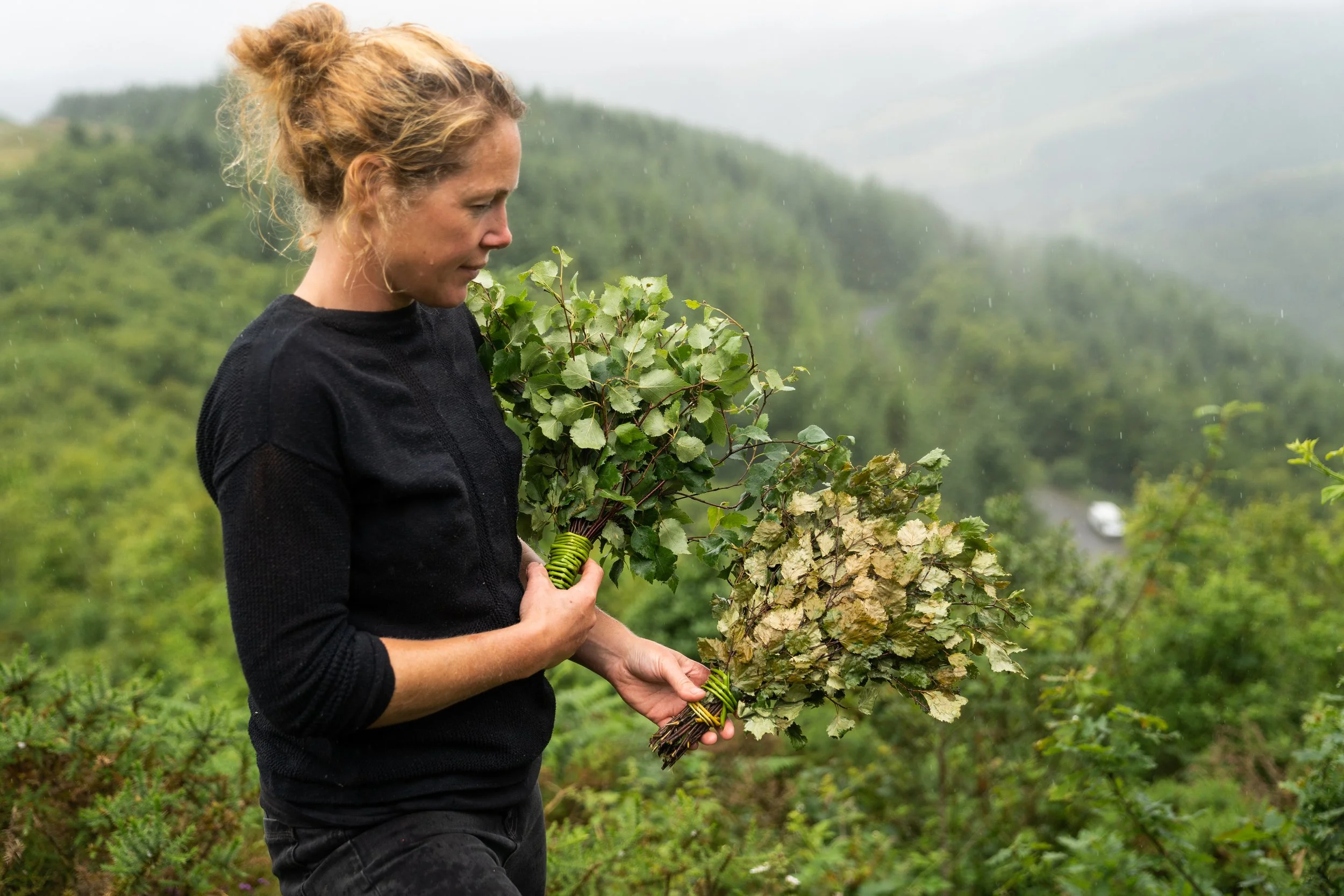
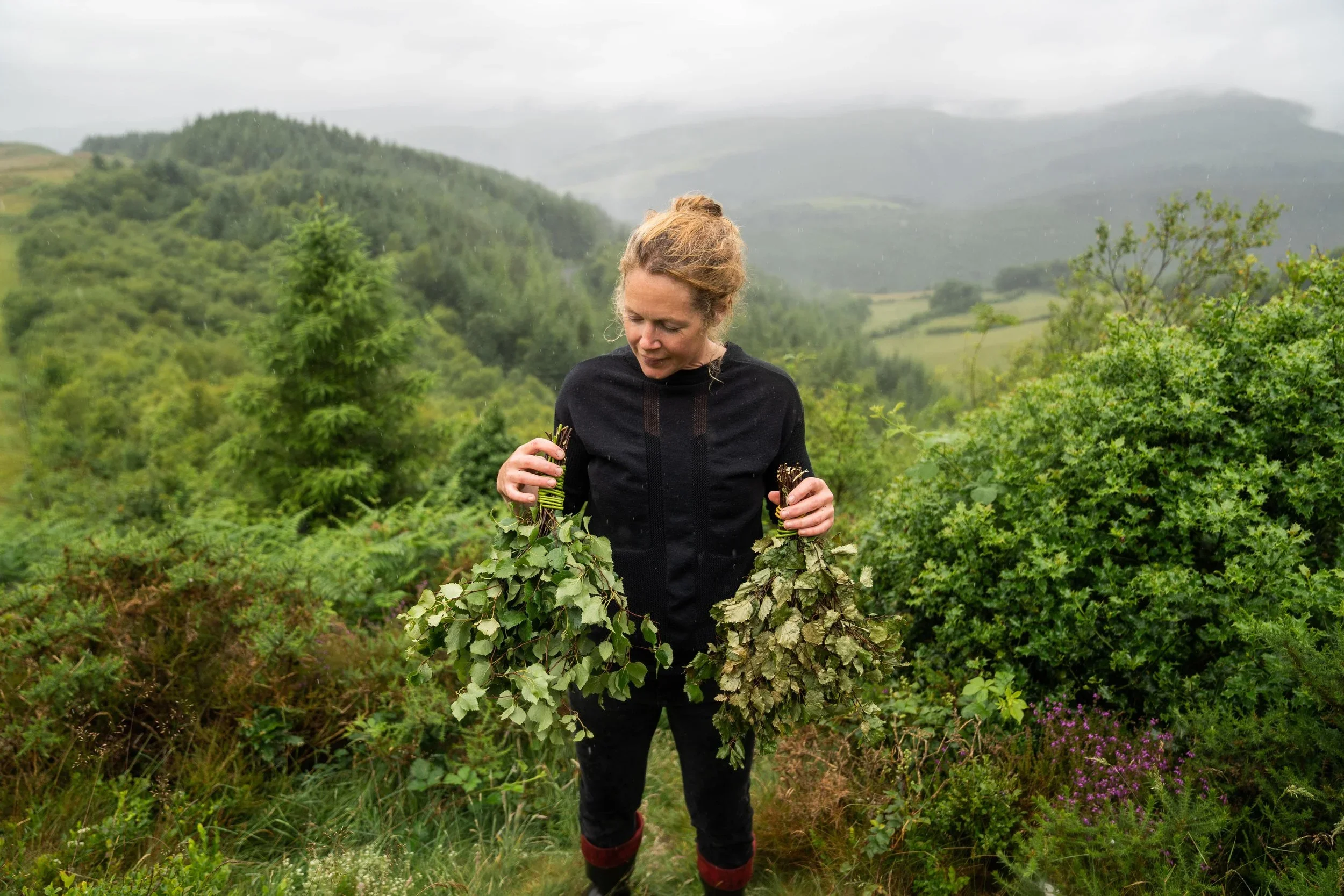
An ancient sauna bathing tradition practiced to promote circulation and improve skin health, many would argue that massage with a traditional birch whisk is essential to an authentic sauna bathing experience. Keen to experience the benefits and share this practice, this summer, we asked local ecologist and natural florist Grace Crabb to sustainably forage birch from the Dyfi forest where our workshop is situated, and to hand-craft Heartwood Saunas’ very own traditional whisks, now available to purchase online!
Grace Crabb holds sauna whisks in the Dyfi forest
Whisks for Health and Relaxation
A sauna whisk (known as a ‘vihta’ or ‘vasta’ in Finnish) is made up of fine, leafy tree-branch tips bound together in a bunch and used for tapping and brushing the body to increase circulation and enrich the skin with therapeutic oils and vitamins. Birch is widely considered the best option for sauna whisks, as birch leaves contain powerful antioxidants such as vitamin C and provitamin A, as well as saponins and tannins revered for beneficial skin-softening, nourishing and antimicrobial properties [1][2].
It’s therefore perhaps unsurprising that a number of health benefits are ascribed to birch whisking; it’s said to improve circulation and lung function, reduce inflammation, soothe skin rashes and speed up the healing of wounds. The oils released by the birch in the process of whisking also fill the sauna with a refreshing, woody aroma, creating an uplifting and immersive sauna bathing experience which boosts mood and aids relaxation.
Looking back over the Dyfi forest while harvesting birch
“I want people to have a relationship with the land they live in, and l’d like everyone to think of the landscape as something they can interact with, not feel separated from.”
Grace with the first birch whisks she made
Introducing Local Maker, Grace Crabb
Local ecologist and nature-inspired florist, Grace Crabb, has lived amongst the birch in the Dyfi valley for 17 years.
“Going into the woods to do woodland management and ecological surveys undoubtedly influences the way I put together the flower arrangements that people order. I want people to feel like the things I make have just been plucked from nature, and I think the structure of nature comes out in what I do because that’s where I spend my time.”
As well as growing and arranging native British flowers, Grace is passionate about engaging people with the local environment and teaches hurdle-making, weaving and wreath-making workshops that aim to connect people with nature through traditional craft. In Grace’s words,
“I’m particularly interested in empowering people to engage with the natural environment in a positive way, and demonstrating sustainable harvesting techniques. I want people to have a relationship with the land they live in, and I’d like everyone to think of the landscape as something they can interact with, not feel separated from.”
This concept really resonates with Heartwood Saunas’ ethos, as we design our outdoor saunas with the aim of fostering a connection with nature and the landscape that surrounds us.
“I hope that demonstrating sustainable management of the forestry that l harvest in will positively influence the way the whole forest is managed going forward.”
Sustainable Foraging for Birch
The Dyfi forest where our workshop is situated, and where Grace has permission from Natural Resources Wales to harvest birch, is home to both downy and silver birch species, which hybridise freely in the regenerated broadleaf copses scattered across the valley. Grace’s background is in biodiversity and woodland management, so protecting the local environment is central to the way in which she works when foraging.
“I hope that demonstrating sustainable management of the forestry that I harvest in will positively influence the way the whole forest is managed going forward.”
Conscious of what the trees can comfortably withstand, Grace carefully selects and prunes side branches from mature birch trees, as these have larger leaves that lay flatter in one direction, making them ideal for sauna whisks. All of the birch used in our whisks is sustainably harvested by hand from the Dyfi forest and prepared by Grace at her home.
Grace carrying birch branches out of the Dyfi forest
From Tree to Whisk
Mid to late June is the best time to harvest, according to Grace, as the leaves are fully grown but still very fresh. Once gathered, the branches are taken back to Grace’s home, where she bundles them up, binds them with willow, and lays them to dry flat between layers of paper atop a pellet stove burner in her kitchen.
Once dried, the birch whisks are stacked and stored in Grace’s workshop. Before use in the sauna, the whisks should be soaked in lukewarm water for half an hour to rehydrate the leaves - the birch-infused water is then excellent for use on the hearth stones, creating an aromatic steam. The whisk should then be placed in a bucket of fresh water then used gently on sauna-warmed skin, rinsed, and hung to be reused a second time if desired - you can learn more about how to use them, and purchase a Heartwood Saunas whisk handmade by Grace here.
We also encourage you to check out Grace Crabb’s courses and flowers.
Sources
1. Rastogi, S. Pandey, M. M. and Rawat, A. K. S. (2015) Medicinal Plants of the genus Betula– Traditional uses and a phytochemical-pharmacological review. Journal of Ethnopharmacology. 159. pp. 62-83. doi: 10.1016/j.jep.2014.11.010
2. Al-Snafi, A. E. (2015) The Medical Importance of Betula Alba - An Overview. Journal of Pharmaceutical Biology. 5(2). pp.99-103.
Wild Swimming: Immersion in Nature
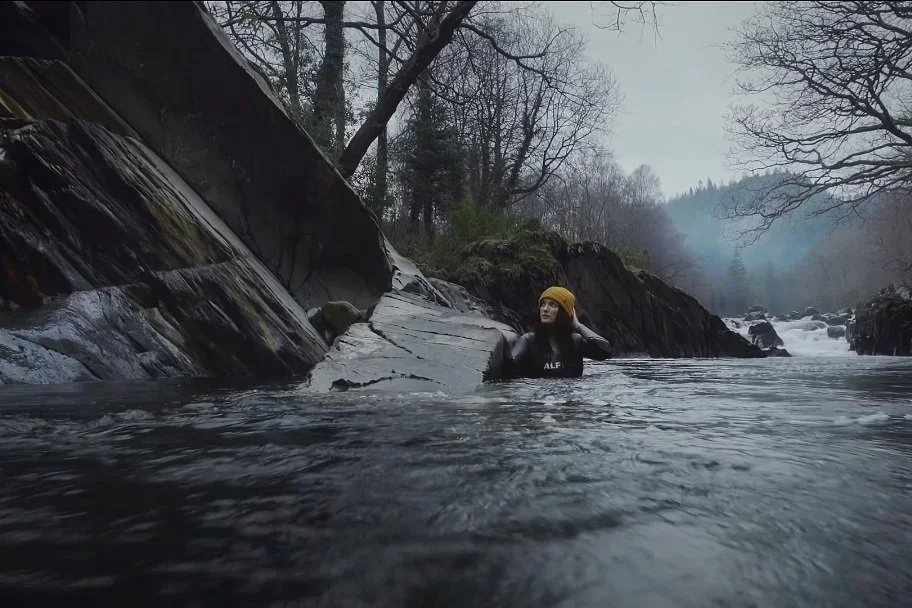
The clear, rippling water of the Dulas that meanders past our riverside sauna in mid-Wales is powerfully inviting - particularly post-sauna! We caught up with local cold-water swimming guide, adventure activist and founder of We Swim Wild, Laura Sanderson to find out why more and more people are taking the plunge into wild swimming, even during the coldest months of the year.
Laura Sanderson wild swimming, still from Hydrotherapy (see below)
The Healing Power of Wild Swimming
Laura’s own journey with wild swimming began as a way to heal and engage with nature following a life threatening illness, then a diagnosis of fibromyalgia, a long-term condition which causes muscle stiffness, fatigue and pain all over the body. Although treatment options for fibromyalgia are limited, Laura was recommended to try taking cold showers to help with muscle pain and joint swelling.
“Cold showers just didn’t appeal to me at all; in fact, I still don’t like cold showers! But I lived right by the beach, so I started swimming in the cold sea, and my symptoms improved immediately.”
Laura credits the salt and magnesium in the sea as one of the reasons for this, but just cold water itself can also have a significant effect on physical health. An article in Experimental Physiology suggests that repeated exposure to cold water immersion could reduce the body’s stress response and in turn reduce inflammation, essentially teaching the body to adapt to stress.
But it's not only the physical effects of cold water swimming that Laura and so many others find beneficial. Cold water swimming can also have a profound impact on mental health. A recent study has shown that regular cold water swimming sessions can significantly improve mood and even help to combat depression.
“When you’re in the water and out in the elements, you’re jolted back into the present moment, you can’t think of anything else but what you are doing, and I think a lot of people do it for that experience.”
Another motivation to swim, particularly on colder days, is the ‘afterglow’. Laura explains,
“When you get out, you experience the afterglow; it’s like a huge rush of endorphins which makes you feel amazing.”
This post-swim buzz is likely generated by a significant increase in feel-good neurotransmitters following cold water immersion, as found in another recent study. This is a natural high that evidently gets people hooked, as many wild swimmers, including Laura, describe their health-boosting hobby as addictive.
“I can’t go on a walk and not go in the water. I feel like I’ve just got to get in, it’s so inviting.”
Wild Swimming Tips
Wild swimming in the cold waters of the UK is not without its dangers, not least of which being cold water shock that can cause people to hyperventilate and even drown. Laura is also a breathwork instructor, and explains that controlling your breathing in cold water is paramount.
“Before you get in, it’s a good idea to regulate your breath for a couple of minutes, for example, breathing in for four seconds, then out for 8 seconds. As you enter the water you should continue this, gradually submerging yourself further on outbreaths. It’s then good to tread water for one or two minutes, continuing to regulate your breath while your body gets used to the temperature before starting to swim.”
Especially on your first wild swims, Laura advises not to push yourself and only stay in for a minute or two. Laura recommends water boots/shoes and gloves in the winter, as well as a wet suit, particularly for longer swims. It’s vital to dry off and warm up thoroughly after being submerged in cold water too, because your body continues to cool for approximately 20-30 minutes, meaning your core body temperature is actually colder a while after you are back on dry land. Being prepared with a towel, warm dry clothes to change into, and a hot drink in a flask is essential. We Swim Wild has more information on how to acclimatise to cold water and warm-up efficiently which you can access here.
There are many environmental safety aspects to consider too, from stormy weather and currents to underwater hazards and harmful algaes (if you’re after some fantastic safety pointers for starting out, visit We Swim Wild. It’s not recommended to try wild swimming alone, and if you’re feeling a bit unsure about beginning, a great way to get started is to book onto a course with an experienced guide. Laura runs courses which cater to all levels throughout the year.
Wild Swimming and Sauna
Recently, Laura has started facilitating wild swim sessions at our Riverside Sauna, where you can combine an invigorating river swim in the clear, ice-cold mountain water with a hot relaxing sauna overlooking the sparkling torrent.
“Combining wild swimming with a sauna takes the experience to a whole new level. I love the extremes of the two, and how you feel totally immersed in the landscape in both. I love the smell of the wood in the sauna, and being able to look out at the river while you relax and recover. You just feel amazing afterwards.”
Typically, Laura’s wild swim and sauna sessions start off with a stretch and breathwork instruction to prepare you for entering the water, then a first guided dip in the river.
“Getting into the water first, before the sauna, makes the sauna that bit more special when it’s time to dry off and warm up. The sauna helps you to recover from the cold water and is an incredible de-stressor, it’s so relaxing. After fifteen minutes in the sauna, you are ready for another dip, so we usually cycle between fifteen minutes in the sauna, then five minutes in the river.”
All proceeds from the wild swim and sauna sessions go towards We Swim Wild’s Clean Waters campaigns.
Protecting Wild Water
Laura’s own wild swimming journey has also nurtured a passion for protecting and preserving wild waters in the UK, which are under threat from plastic pollution. Laura teamed up with Dr Christian Dunn at Bangor University a few years ago to begin to measure the scale of the problem - “we found micro-plastics even in the most pristine lakes in Snowdonia.”
Compelled to initiate a change, they started We Swim Wild, a not for profit company and campaigning body that inspires, unites and empowers wild swimming communities and other water users to take action against micro-plastic pollution and other silent contaminates in order to protect biodiversity and safe swim spaces. We Swim Wild helps to generate data through citizen science with the aim of instigating legislation changes at a government level. You can find out more about their projects and how you can help protect wild waters in the UK here.
Connecting with Nature
For Laura, wild swimming isn’t just about being in cold water; it’s about feeling fully immersed in a natural landscape.
“Being outside in nature, submerged in cold water, it makes you feel alive. When you’re in the water, you’re totally immersed in the landscape. Simply being outdoors isn’t always enough to get you out of your head and into the moment; but in cold water, you are forced to engage with the environment and be present in your body.”
A recent study confirms that spending time in nature boosts health and wellbeing, and following the global pandemic and lockdowns of recent years, accessing nature feels more important than ever. Accordingly, wild swimming has been gaining popularity significantly in recent times; Outdoor Swimmer magazine’s annual ‘Trends in Outdoor Swimming’ report states that searches for the term ‘wild swimming’ increased by 94% between 2019 and 2020. Meanwhile, the Outdoor Swimming Society’s membership has also increased significantly in the last two years.
Nature is the perfect antidote to the stresses of our modern lives, and wild swimming, for many, offers a total escape and a deep connection with the natural world.
You can find out more about Laura’s personal journey with wild swimming in the video below.